2014年11月15日星期六

chapter 8 review: happiness

Chapter 8 review: Happiness
-Happiness is a positive emotion (fear, anger, disgust, and sadness are negative emotions. However surprise can be a negative or a positive emotion)
-Difference between happiness and pain
              i Pleasure is only a physical sensation, which opposes to the sensation of pain.
-Difference between happiness and excitement
              i Excitement can be considered as a different emotion
              ii The opposite of excitement is boredom
-Three types of happiness
              i When pain stops
              ii Relief happiness (pleasure-happiness or excitement-happiness)
              iii Self-concept. (something happens enhancing your view of yourself)

-Intensity of happiness
              Mild happy: smile or a broad grin
              Ecstasy or joy: laughter with tears (comes with particular experiences, such as certain jokes)
              Smile however, often occurs when someone is not happy, when they are trying to mask their real emotions
              The intensity of happiness is primarily determined by the position of the lips


intensity of happiness: the position of lips "Unmasking the face, Paul Ekman, p104" 

contempt (mouth)+happiness(lower eyelid and cheeks)
"Unmasking the Face, Paul Ekman, p.109"


surprise (brows/forehead and eyes) +happiness (lower face including lower eyelid)
"Unmasking the Face, Paul Ekman, p.108"

Fear (eyes and brow/forehead) + happiness
"Unmasking the Face, Paul Ekman, p.111" 

Anger+happiness 
"Unmasking the Face, Paul Ekman, p.110"

Facial expression of happiness
     "  -Corners of lips are drawn back and up
       -The mouth may or may not be parted, with teeth exposed or not
       -A wrinkle runs down from the nose to the outer edge beyond the lip corners
       -The cheeks are raised
       -The lower eyelid shows wrinkles below it, and may be raised but not tense." (Unmasking the Face, Paul Ekman, p.112) 

"Unmasking the Face, Paul Ekman, p.112" 


2014年11月11日星期二

Quotes: disgust

'Unmasking the Face, Paul Ekman, Chapter 6"

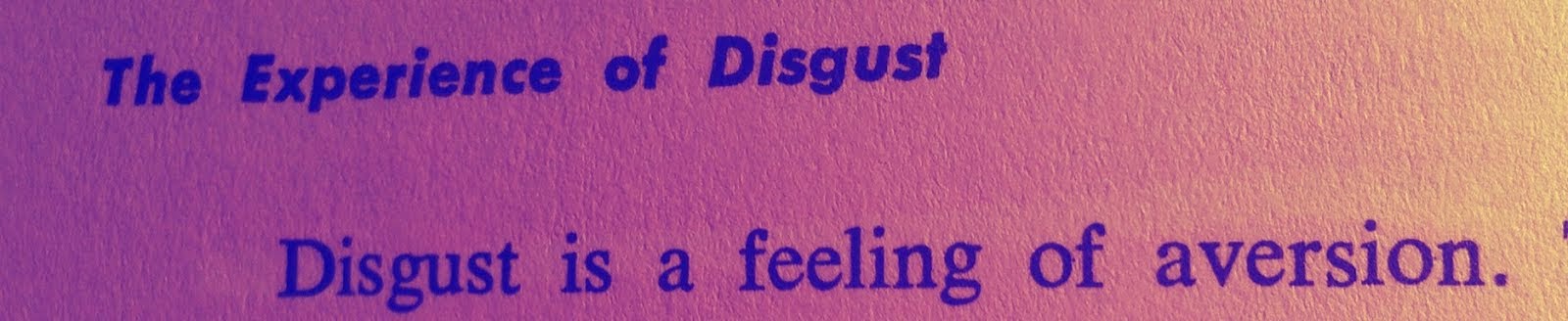
"Disgust is a feeling of aversion."

"Contempt is a close relative of disgust, but it differs in some ways."

"Disgust usually involves getting-rid-of and getting-away-from responses. Removing the object or oneself from the object is the goal." 

Chapter 7 Review: Anger

Chapter 7 review: anger
Anger usually causes harm
Adults manage to control their anger, people also differ from the intensity of their anger:
              -Slow Burner
              -Short fused
              -Explosive
              -Hothead
              -Cool
Causes of Anger
              -Frustration
              -Physical or verbal attack
              -Physical threat
              -Someone’s action or statement, which causes you to feel psychologically hurt
              -Observing someone do something, which violates your morals
              -A person failure to reach your expectations, usually is a parent towards child
              -Another person’s anger directed to you
* The ones marked as red are not common

Physical phenomenon when angry
              -Blood pressure increases
              -The face may redden
              -The veins on the neck and forehead become more apparent
              -Breathing changes
              -Muscles tensed
People who can’t express the emotion anger usually has psychological illnesses

Intensity of Anger
              -Mild anger: slight irritation or annoyance

              -Extreme anger: rage or fury

Blend of anger
              -The blend of another emotion usually causes the anger expression unclear or being easily masked.

anger (lip press, tension on eyelids)+disgust(upper-lip raise, nose wrinkled, )
Unmasking the face, Paul Ekman, p.93

two types of anger+disgust
Unmasking the Face, Paul Ekman, p.94

anger(brow and eyes) + surprise(mouth)
Unmasking the Face, Paul Ekman, p.95


The appearance of anger:
            "  -The brows are lowered and drawn together
              -Vertical lines between the brows
              -The lower lid is tensed and may or may not be raised
              -The upper lip is tensed and may or may not be lowered by the actions of the brow
              -The eyes are a hard stare and may have a bulging appearance
              -The lips are in either of two basic positions: pressed or firmly together, with the corners straight or down; or open, tensed in a “squarish” shape as if shouting.
              -The nostrils may be dilated, but this is not essential to the anger facial expression and may also occur in sadness
              -There is ambiguity unless anger is registered in all three facial areas" (Unmasking the face, Paul Ekman, p95-97)